

How to Make Synthetic Hair Look Natural: 7 Easy Steps
Table of Contents
- Start With a Wig That Fits Your Head and Style
- How to Make a Synthetic Wig Hairline Look Natural
- How to Make a Synthetic Wig Part Look Natural
- How to Reduce Shine on a Synthetic Wig
- How to Add Volume to a Synthetic Wig
- Style Synthetic Hair to Match Your Natural Texture
- Care for Synthetic Hair So It Keeps Looking Natural
- Conclusion
- Frequently Asked Questions
Last Updated: October 21, 2026
Start With a Wig That Fits Your Head and Style
The fastest way to make synthetic hair look natural is to start with a wig that fits your head properly and matches your face shape.
At Albertina's Beauty Supply, first-time buyers often say the wig looked perfect in the photo but arrived flat and fake.
Here is the baseline check before you style anything:
- Measure your head circumference and compare it to the wig's cap size
- Confirm the cap has adjustable straps or combs at the nape
- Match density to your own hair: fine hair pairs best with lighter density
A common mistake is buying for the style and ignoring the cap. A simple wig that fits well beats an expensive one that slides.
How to Make a Synthetic Wig Hairline Look Natural
To make a synthetic wig hairline look natural, soften the front edge and remove bulk. The hairline is the first thing people notice, and a hard, dense line reads as a wig instantly.

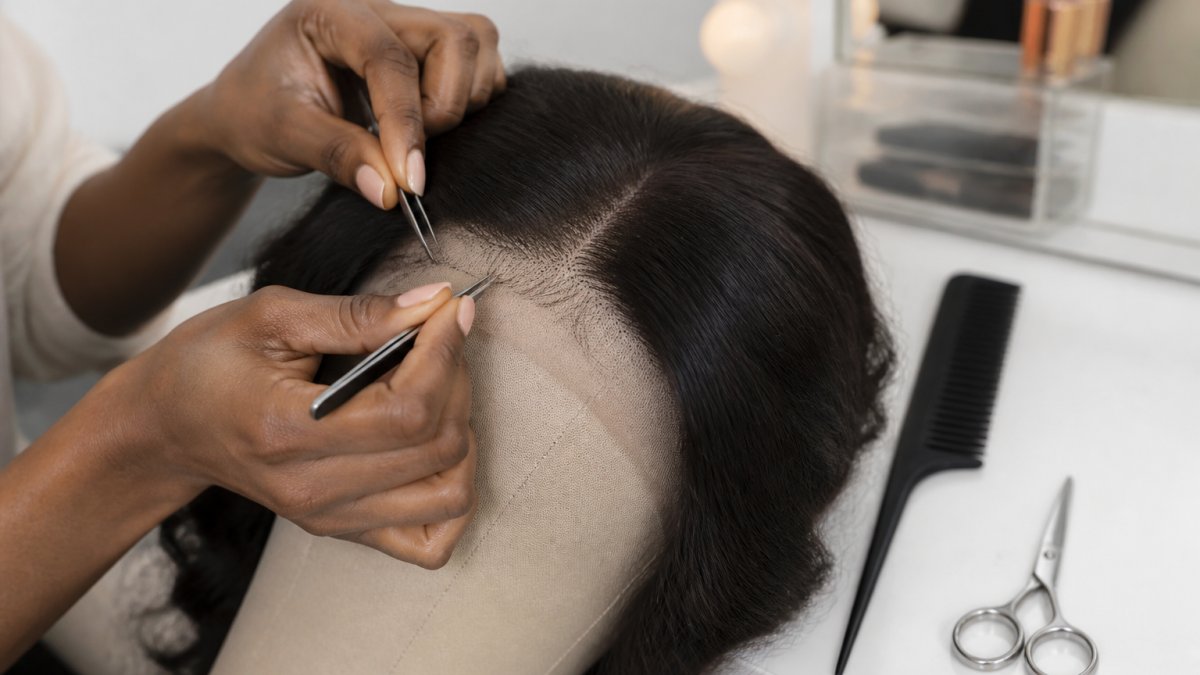
Work through these steps in order:
- Trim the lace. Cut lace back to just above the hairline, never into the knots.
- Pluck the front rows. Use tweezers to thin the first few rows of knots so the hairline looks sparse, like real hair growth.
- Blend with skin tone. Dot a skin-colored concealer along the part and hairline, then blend with a small brush.
- Set with light powder. A dusting of translucent powder stops shine where the lace meets your forehead.
- Lay baby hairs. A few soft, short strands at the temples break up the hard edge.
Pluck in small sections and check in a mirror after each pass. Over-plucking leaves bald patches you cannot undo.
How to Make a Synthetic Wig Part Look Natural
A natural-looking part comes down to three things: a clean line, scalp color that matches your skin, and a little movement at the root.
Start by deciding where the part should sit.
To build the illusion:
- Apply concealer or scalp-colored powder along the part line
- Use a fine comb to separate the strands evenly
- Zigzag the part slightly instead of drawing a ruler-straight line
Zigzagging matters more than people expect. Real scalps rarely show a perfect straight line, and a slight zigzag reads as natural hair growth rather than a manufactured seam.
How to Reduce Shine on a Synthetic Wig
To reduce shine on a synthetic wig, first understand where it comes from. Most synthetic fibers have a surface finish that reflects light evenly, which reads as glossy and artificial under indoor lighting. The goal is not dull hair, it is breaking up that uniform reflection so the fiber looks like individual strands.

Why synthetic wigs shine
Factory shine comes from the fiber's coating and light hitting a smooth, uniform surface. Friction adds a third layer: brushing a dry synthetic wig too aggressively polishes the fibers, so a wig often looks shinier after a few weeks of daily brushing than it did out of the box.
A safe, step-by-step shine-reduction routine
- Wash with cool water and mild shampoo. Use a sulfate-free or gentle shampoo. Hot water can relax the fiber and increase surface sheen. Rinse thoroughly, product residue attracts dust and makes shine worse.
- Air dry on a stand. Never wring or towel-scrub the wig. Pat gently with a microfiber towel and let it dry completely before styling.
- Apply a light, wig-safe matte product. A small amount of wig-safe serum or a dry shampoo mist applied from 8-10 inches away helps cut reflection. Avoid heavy oils, silicone-heavy serums, and alcohol-based sprays, these can build up, attract lint, or dry the fiber.
- Comb with a wide-tooth comb on damp hair. Work from the ends up. Dry brushing creates friction and polish, which increases shine.
- Use a light dusting of translucent powder only where needed. A small amount along the part and hairline can matte the most reflective areas without making the whole wig look chalky.
What to avoid
- Heavy silicone serums: They coat the fiber and can make it look greasier and shinier over time.
- Alcohol-based styling sprays: They can dry out synthetic fibers and cause frizz.
- Hot tools on non-heat-friendly fibers: Heat can melt or crimp the surface, creating permanent shine or damage.
Troubleshooting shine by symptom
- Uniform glossy sheen: Likely factory coating. A gentle wash and light matte product usually helps.
- Shine concentrated at the crown or part: Often friction from brushing or product buildup. Clean the area and switch to a wide-tooth comb.
- Shine that appeared after styling: Check whether a hot tool or heavy product was used. If the fiber is crimped or melted, the damage is permanent.
How to Add Volume to a Synthetic Wig
Adding volume to a synthetic wig is about lifting the roots and shaping the crown without damaging the fiber. Most synthetic wigs look flat because the cap sits close to the head and the top has no lift.
First, check what your fiber can handle
Before you tease, roll, or heat-style, confirm whether the wig is heat-friendly. Check the manufacturer's label or packaging. If it does not explicitly say "heat-friendly" or "heat-resistant," treat it as non-heat-friendly and use only no-heat methods.
Curly Synthetic Wig | 14 Inches →
A beginner-friendly sequence for natural-looking volume
- Start with a well-fitted cap. A loose cap shifts and flattens the crown. Adjust straps and combs at the nape before styling.
- Detangle completely. Use a wide-tooth comb from the ends up. Styling tangled hair creates clumps and uneven volume.
- Lift the roots with no-heat methods first. Gentle teasing at the crown with a fine comb, then smooth the top layer over it. This is the safest way to add lift without heat damage.
- Use velcro rollers or pin curls for shape. Set them on dry hair and leave overnight. Avoid hot rollers unless the fiber is confirmed heat-friendly.
- Backcomb lightly at the roots. Mist with a wig-safe spray to help the shape hold. Do not over-backcomb, it can cause tangles and friction damage.
- Choose a layered cut for movement. Layers help the hair fall with movement instead of hanging flat. If you are buying a new wig, medium density with layers often gives more natural lift than a long, heavy one.
Matching density to your own hair
If you have fine, thin hair, density matters more than length: a medium-density wig with layers gives more lift than a long, heavy one that pulls down at the crown. If your own hair is thick, a very low-density wig can look flat and artificial. Match the density to what people are used to seeing on you.
Troubleshooting volume problems
- Wig looks flat at the crown: Check cap fit first, then add root lift with teasing or rollers. A cap that sits too low drags the whole look down.
- Volume looks bulky or unnatural: Reduce backcombing and smooth the top layer. Too much product or teasing can make the crown look puffy rather than natural.
- Volume collapses during the day: Use a light wig-safe spray and avoid heavy products that weigh the fiber down. Store the wig on a stand to maintain shape between wears.
Style Synthetic Hair to Match Your Natural Texture
Matching synthetic hair to your natural texture is what makes a wig look like it grew from your scalp.
Match the curl pattern first, then the color. Our Curly Synthetic Wig | 14 Inches works well for a soft, everyday curl, while the Short Curly Synthetic Wig with Long Bangs suits a fuller, bolder shape.
For straight or wavy looks, the Synthetic Wig | 55cm comes in Natural Black, Light Brown, Dark Brown, and Brown Black, so you can match your own shade. The Synthetic Wig | Blonde is a good pick if you want a lighter tone.

A few styling rules keep the look natural:
- Match the part and hairline to your own hairline
- Keep the length close to what you normally wear
- Use bangs or a side sweep to hide a visible lace edge
Braids and ponytails are underrated: a loose side braid or low ponytail hides the cap edge and looks intentional, not like a cover-up.
Care for Synthetic Hair So It Keeps Looking Natural
Synthetic hair stays natural-looking only with regular, gentle care. Fibers collect dust, oil, and product buildup, which dulls the finish and causes frizz and tangles.
Follow a simple routine:
- Wash every 8 to 10 wears in cool water with mild shampoo
- Detangle with a wide-tooth comb, starting at the ends
- Air dry on a stand, never on a radiator or in direct sun
Refresh between washes with a light mist and a quick comb-through.
Synthetic hair has a limited lifespan, and daily wear speeds up the wear and tear. Rotating two wigs extends the life of both and keeps each one looking fresher for longer.
Conclusion
Making synthetic hair look natural is a skill, not a lucky purchase. Fit, hairline, part, shine, and care all work together, and skipping one step shows. Every fix here is something you can do at home with a few simple tools.
At Albertina's Beauty Supply, we stock affordable wigs and extensions designed for exactly this kind of at-home styling, from curly and straight synthetic wigs to the beauty essentials that finish the look.
Frequently Asked Questions
Can you use heat tools on synthetic hair?
Only if the wig is labeled heat-friendly or heat-resistant. Regular synthetic fibers can melt or frizz when touched with hot tools. Check the supplier's care instructions for the maximum temperature, and always test a small hidden section first. Use the lowest heat setting that works, keep the tool moving, and avoid holding it in one spot. If the label does not mention heat, treat the wig as no-heat and use rollers or steam instead.
How do I reduce shine on a synthetic wig?
A light dusting of translucent setting powder along the top and lengths cuts glare without dulling the color. Avoid heavy silicone serums, which attract dust and make the shine worse. Wash the wig less often and use cool water, because hot water can increase shine on synthetic fibers.
What is the four-finger rule for wigs?
The four-finger rule is a quick way to check where a wig's hairline should sit. Place four fingers flat against your forehead, starting at your natural hairline. The top edge of your pinky finger marks where the wig's front hairline should rest. Adjust for your face shape: a slightly lower hairline softens a long forehead, while a higher one balances a short forehead. This simple check helps avoid a wig that sits too low or too high.
How do I make a synthetic wig part look natural?
Use a fine-tooth comb to draw a clean part, then pluck a few hairs along the line with tweezers to soften it. Apply a skin-tone concealer or powder directly to the part to mimic scalp. For a middle part, keep the line slightly zigzagged rather than perfectly straight. Set the part with a light mist of water and let it dry flat. A realistic part makes synthetic hair look natural even up close.


